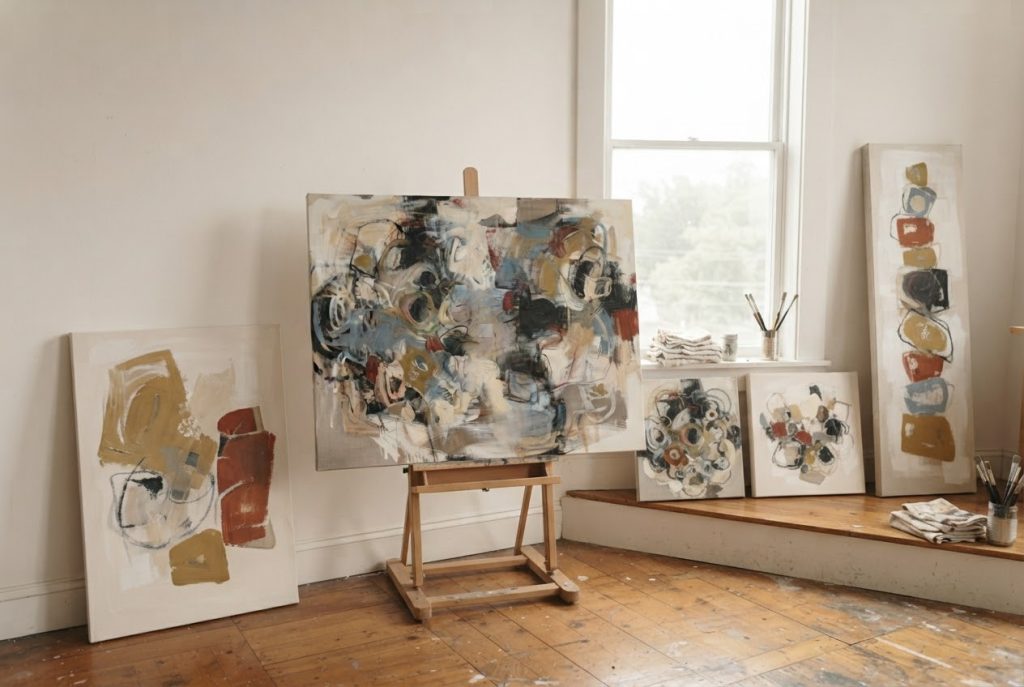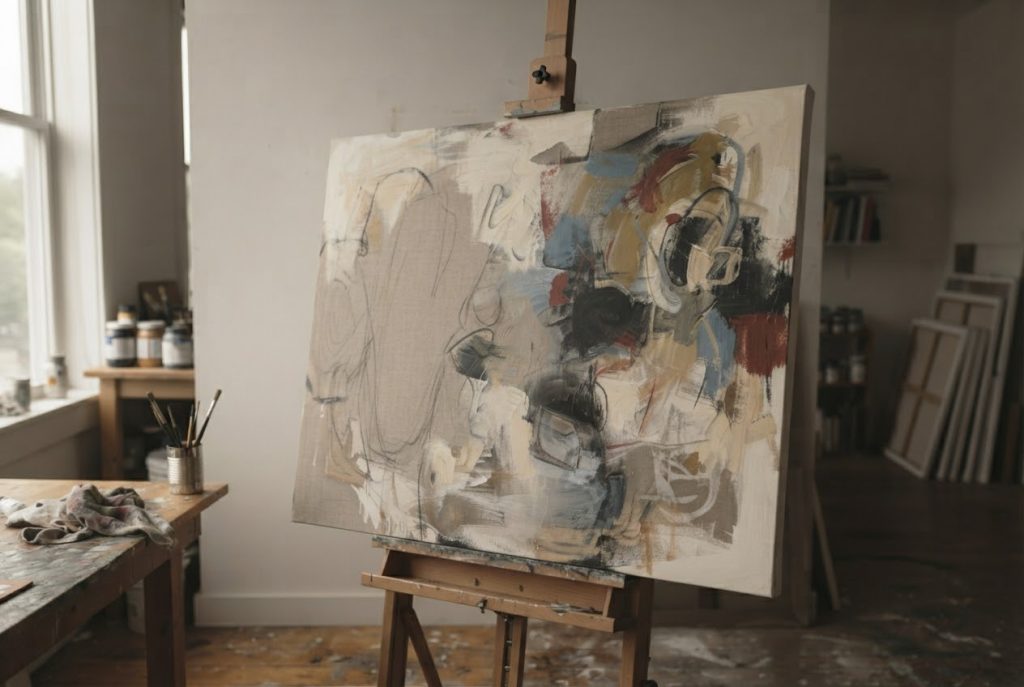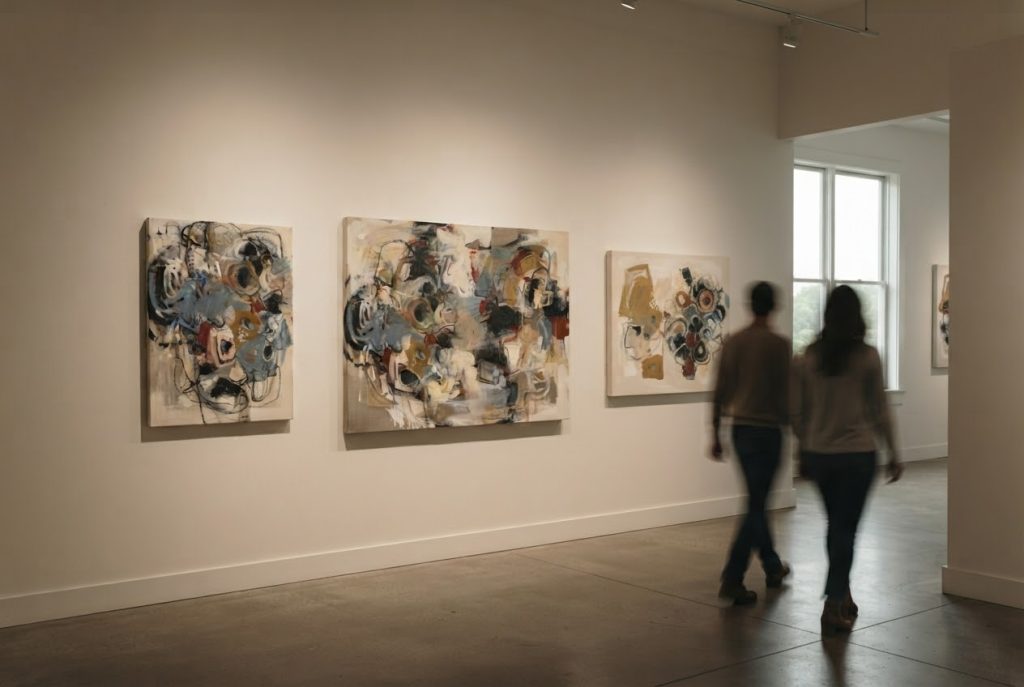
There is a particular kind of silence before an exhibition opens. The paintings are already on the walls, the labels are in place, and the room is ready. Yet something still feels unfinished. I think it is the anticipation of seeing the work meet someone else’s eyes.
For months, these paintings had existed within the familiar boundaries of my studio. I knew the marks I had changed, the colors I had almost abandoned, and the small decisions that had brought each piece to its final form. In the gallery, those details remained, but the paintings began to occupy a different kind of space.
Preparing the Works
Getting a collection ready for an exhibition is a practice of looking again. A painting that feels complete on an easel may need a different frame, a little more room around it, or a different relationship with the work beside it.
I spent time laying the pieces out together before they were installed. Some belonged next to one another because they shared a palette. Others needed distance, allowing each painting to hold its own attention. The process reminded me that a collection is not simply a group of individual works. The space between them matters, too.
Finding Their Place
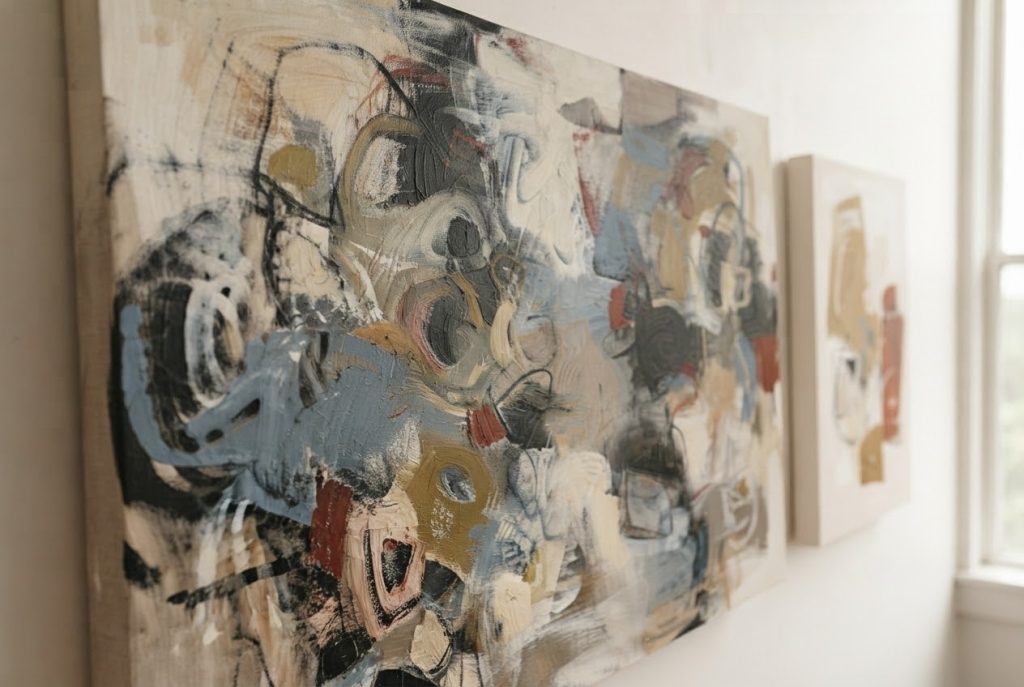
The gallery changed the way I understood certain paintings. Colors that had seemed quiet in the studio became more pronounced under the exhibition lighting. A smaller work that I had nearly overlooked became a point of pause when given enough space on the wall.
I was reminded to resist the temptation to explain everything through arrangement. Sometimes the most useful decision is to leave room for a viewer to approach a work without being told what to find.
An artwork leaves the studio when it is ready to be shared, but its meaning is never entirely mine to determine.
That thought stayed with me as the installation came together. I could prepare the work, make choices about its presentation, and offer some context. I could not decide what another person would see in it.
The First Conversations
During the exhibition, I found myself paying attention to the moments that happened between the usual questions about materials and technique.
Someone would stand in front of a painting for a little longer than expected. Another visitor would notice a detail I had stopped seeing months ago. Sometimes a conversation would begin with a question about a color and move somewhere much more personal.
These encounters reminded me of three things:
- Attention takes time. Not every work reveals itself in the first few seconds.
- A viewer brings their own history. The same image can meet different people in very different ways.
- Sharing the work is part of the practice. The studio may be where a painting begins, but it is not the only place where it can matter.
Beyond the Opening
An exhibition eventually comes down. The walls return to their ordinary state, the paintings are packed away, and the familiar routines of the studio resume. What remains is not always a clear conclusion. Often, it is a collection of questions I carry into the next body of work.
I am learning to value that uncertainty. The purpose of showing a painting is not necessarily to arrive at a single interpretation, but to make space for an encounter that might not otherwise happen.
The works have returned to their physical forms: canvas, pigment, surface, frame. Yet I see them a little differently now.
Explore the collection